Toxic Parents or Just 'Desi Love'? How to Set Boundaries
Toxic Parents or Just 'Desi Love'? How to Set Boundaries (Without Getting Disowned)
Let’s get the basics straight before we dive in.
Key Takeaways: Quick Fundas
The Verdict: Most Indian parents aren't "villains"; they are just running on outdated software called "Fear & Society."
The Villain: Emotional Blackmail ("Humne tumhare liye kya kuch nahi kiya"). It’s a trap.
The Hack: The "Information Diet." Stop telling them everything. Mystery creates safety.
The Goal: You don't need their permission to be an adult; you just need your own conviction.
The Hook: The "Cut Fruit" Apology
You know the scene.
You just had a massive screaming match with your dad about your career, your partner, or why you came home at 11 PM. Words were fired like bullets. You slammed the door, heart pounding, swearing you’ll never talk to them again.
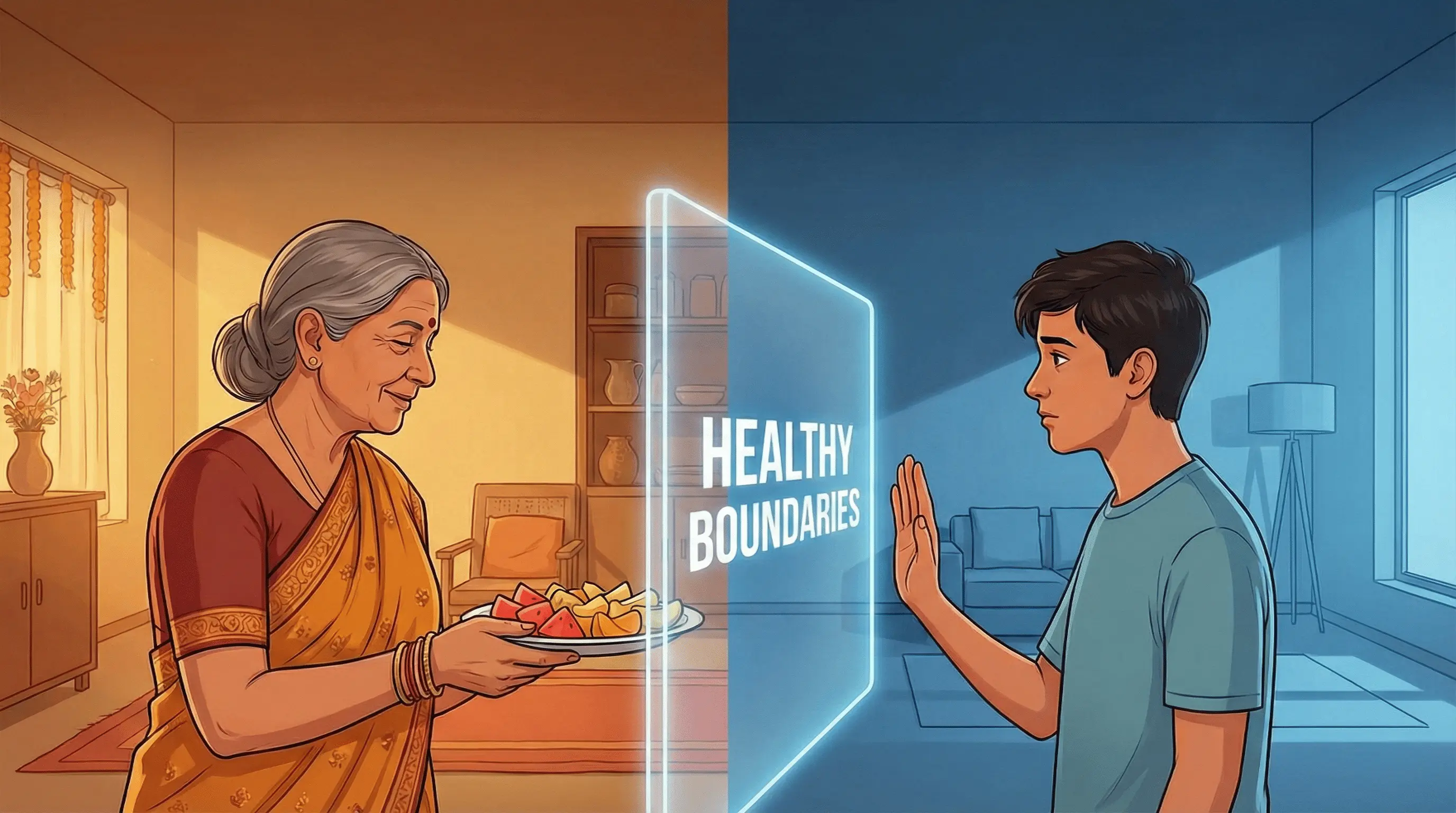
Twenty minutes later, your mom walks into your room silently and places a plate of cut apples or peeled oranges on your table. She doesn't say "Sorry." She says, "Kha le, bhook lagi hogi." (Eat, you must be hungry.)
And just like that, you are confused.
Are they toxic? Or do they love you too much?
If you feel suffocated but also guilty for wanting space, welcome to the Indian Family Dilemma. We are raised to believe that Boundaries = Disrespect. But let's be honest: living in a house where you constantly feel judged, monitored, or guilt-tripped isn't "culture." It’s exhausting.
The Reality Check: Care vs. Control
Before we start building walls, let’s diagnose the problem. There is a thin line between "Desi Concern" and "Toxic Control."
Desi Love looks like:
Calling to check if you reached home safely.
Giving unsolicited advice because they don't want you to fail.
Getting annoyed but eventually accepting your choices.
Toxic Control looks like:
The Guilt Trip: "If you move out, I will get a heart attack." (Weaponizing health).
The Comparison: "Look at Sharma Ji’s son. Why can't you be like him?" (Destroying self-esteem).
The Spyware: Reading your diary, checking your phone, or demanding passwords.
The Financial Leash: "We pay for your phone, so we decide who you talk to."
If your mental health is crashing every time you enter your house, that’s not love. That’s a hazardous environment.
The Guide: The "Brown Kid" Protocol for Boundaries
You cannot change your parents. They have spent 50+ years being this way. You can only change how you react to them.
1. The Information Diet (Kam Bolo, Sukhi Raho)
The biggest mistake we make? We overshare. We tell them about our relationship drama, our bad day at work, or our wild plans, looking for sympathy.
The Rule: If they weaponize what you tell them, stop telling them.
How to do it: Share the headlines, not the story.
Instead of: "My boss yelled at me and I hate my job."
Say: "Work was fine. Just busy."
Be boring. Boring is safe.
2. Stop J.A.D.E-ing
I mentioned this in my previous post, but it is critical here. Do not Justify, Argue, Defend, or Explain.
Parent: "Why are you wearing this dress? It’s too short."
You (Old Way): "It’s not short! Everyone wears this! It’s fashion!" (This leads to a 2-hour fight).
You (New Way): "I like it." (And then walk away).
You can’t argue with a brick wall. Stop trying.
3. Financial Independence is Your Freedom Card
Let’s be real. In an Indian household, Money = Power.
As long as you are asking them for pocket money, you are a child in their eyes. The moment you pay your own bills, the dynamic shifts. They might not like your choices, but they can't stop them.
Pro Tip: Even if you live at home, offer to pay the electricity bill or buy groceries. It signals: "I am a contributor, not a dependent."
The "Mental Peace" Balance Sheet
Setting boundaries feels like you are being "selfish." Let’s reframe that. You are investing in the relationship's longevity.
Scenario | The "Adarsh Balak" (Obedient Child) | The "Boundary Setter" (Adult) |
Daily Vibe | Constantly anxious, hiding things, lying to avoid conflict. | Open but firm. You don't lie; you just don't share everything. |
Resentment | High. You secretly hate them for controlling you. | Low. You accept them as they are because they can't hurt you anymore. |
Long Term | You eventually explode and cut them off completely. | You maintain a healthy, distant, but loving relationship. |
Conclusion: You Can Love Them From a Distance
Here is the hardest pill to swallow: Disappointing your parents is a part of growing up.
If you live your life trying to keep them 100% happy, you will make yourself 100% miserable. And guess what? A miserable child cannot take care of aging parents.
You can love them, bring them gifts, and respect them, while still locking your bedroom door. You can be a "good child" and still say "No" to a forced marriage or a career you hate.
The guilt will come. Let it come. It’s just a sign that you have a good heart. But don't let the guilt drive the car.
Take a deep breath. You are not a bad person. You are just an adult.
Next Step for You: Is there one topic (marriage, money, career) that always causes a fight? For the next week, try the "Information Diet" just for that topic. Don't bring it up. If they bring it up, give a one-word answer and leave the room. Try it.